Easy Crochet Dishcloth Free Pattern for Table Linen
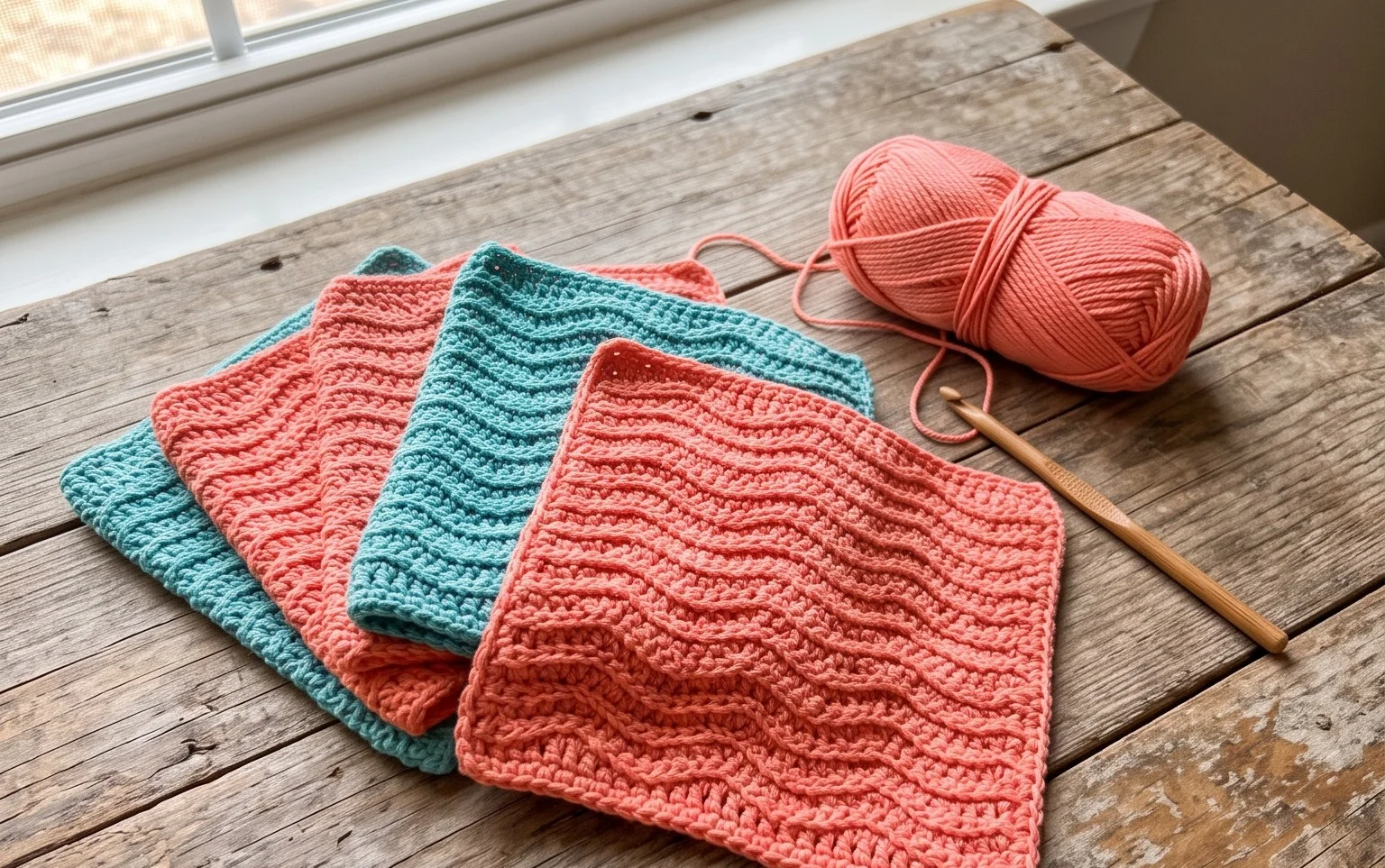
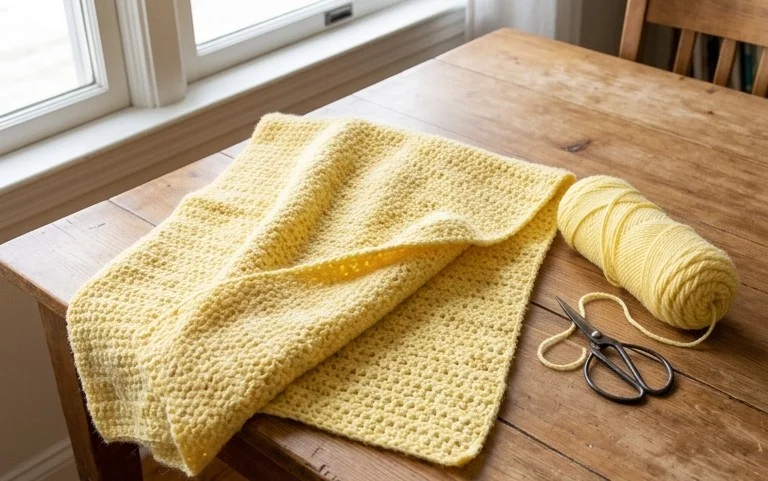
A firm cotton dishcloth with neat, even rows can make a kitchen feel a little more put together, and this one has a sturdy texture for everyday washing and wiping. The simple rectangle works well for beginners who want practice keeping their edges straight, while gift makers can crochet a useful set in an afternoon. It also suits home decor lovers who enjoy choosing colors to match a kitchen or dining space. You will work back and forth in single crochet, using a short repeat that is easy to follow and pause between rows. The pattern uses about 55 yards of worsted-weight cotton, so it is a handy way to use part of a skein. Along the way, you will find sizing and gauge notes to help your cloth come out close to the stated measurements.
Why You’ll Love This Pattern
A firm cotton fabric and simple single crochet make this dishcloth useful for everyday washing and wiping. The pattern is worked flat in straight rows, so you do not need to join rounds or keep track of increases. It is a practical first project for learning to maintain an even edge, and the short rows make it easy to put down and pick up again. One cloth takes about 55 yards of worsted cotton, so a partial skein is often enough.
The rows were easy to follow, and my cotton cloth came out sturdy enough for the kitchen. I added a marker to the first stitch of each row and kept the edges straight.
— Maya, beginner crocheter
Pattern Overview & Skill Level
- Skill Level: Beginner. You need to chain and single crochet, and to count stitches at the end of each row.
- Approximate Time: 2–3 hours, depending on your pace and experience.
- Construction: A flat rectangle worked back and forth in single crochet rows, with no seaming.
- Finished Dimensions & Sizing: About 6¼ × 7 inches after washing and drying flat, using the gauge below.
- Gauge: 16 single crochet stitches and 18 rows measure 4 inches. Gauge affects the finished size and how much yarn you use.
Materials & Supplies Needed
- Yarn: About 55 yards of worsted-weight (#4) 100% cotton yarn. One color is enough; use a light color if you want to see your stitches clearly.
- Hook: 5.0 mm / H-8 crochet hook. If your fabric feels stiff, try a 5.5 mm hook; if it feels loose and floppy, try a 4.5 mm hook.
- Notions: Tapestry needle for weaving in the ends, scissors, and an optional stitch marker to mark the first stitch of a row.
- Substitutions: Cotton is absorbent and stands up well to repeated washing. A cotton-linen yarn can make a slightly textured cloth; check its label for washing instructions. Acrylic yarn is less absorbent and may feel less suitable for washing dishes. Changing yarn weight or hook size will change the dimensions and yardage.
Stitch Guide & Abbreviations (US Terms)
- ch: Chain.
- sc: Single crochet. Insert the hook into the stitch, yarn over and pull up a loop, yarn over again, then pull through both loops on the hook.
- st: Stitch.
- sts: Stitches.
The turning chain does not count as a stitch in this pattern. Work the first single crochet into the first stitch of the row, and make the final single crochet in the last stitch. This keeps the edges straight.
Step-by-Step Pattern Instructions
Dishcloth
Make a starting chain that is loose enough to stretch without puckering. For the row stitch count, do not count the turning chain as a stitch.
- Row 1: Ch 26. Sc in the second ch from the hook and in each ch across. Turn. (25 sts)
- Row 2: Ch 1. Sc in each st across. Turn. (25 sts)
- Row 3: Ch 1. Sc in each st across. Turn. (25 sts)
- Row 4: Ch 1. Sc in each st across. Turn. (25 sts)
- Row 5: Ch 1. Sc in each st across. Turn. (25 sts)
- Row 6: Ch 1. Sc in each st across. Turn. (25 sts)
- Row 7: Ch 1. Sc in each st across. Turn. (25 sts)
- Row 8: Ch 1. Sc in each st across. Turn. (25 sts)
- Row 9: Ch 1. Sc in each st across. Turn. (25 sts)
- Row 10: Ch 1. Sc in each st across. Turn. (25 sts)
- Row 11: Ch 1. Sc in each st across. Turn. (25 sts)
- Row 12: Ch 1. Sc in each st across. Turn. (25 sts)
- Row 13: Ch 1. Sc in each st across. Turn. (25 sts)
- Row 14: Ch 1. Sc in each st across. Turn. (25 sts)
- Row 15: Ch 1. Sc in each st across. Turn. (25 sts)
- Row 16: Ch 1. Sc in each st across. Turn. (25 sts)
- Row 17: Ch 1. Sc in each st across. Turn. (25 sts)
- Row 18: Ch 1. Sc in each st across. Turn. (25 sts)
- Row 19: Ch 1. Sc in each st across. Turn. (25 sts)
- Row 20: Ch 1. Sc in each st across. Turn. (25 sts)
- Row 21: Ch 1. Sc in each st across. Turn. (25 sts)
- Row 22: Ch 1. Sc in each st across. Turn. (25 sts)
- Row 23: Ch 1. Sc in each st across. Turn. (25 sts)
- Row 24: Ch 1. Sc in each st across. Turn. (25 sts)
- Row 25: Ch 1. Sc in each st across. Turn. (25 sts)
- Row 26: Ch 1. Sc in each st across. Turn. (25 sts)
- Row 27: Ch 1. Sc in each st across. Turn. (25 sts)
- Row 28: Ch 1. Sc in each st across. Turn. (25 sts)
- Row 29: Ch 1. Sc in each st across. Turn. (25 sts)
- Row 30: Ch 1. Sc in each st across. Turn. (25 sts)
- Row 31: Ch 1. Sc in each st across. Turn. (25 sts)
- Row 32: Ch 1. Sc in each st across. Fasten off, leaving a tail of about 6 inches. (25 sts)
Finishing
Thread the tail onto a tapestry needle. Weave it through the backs of several stitches, change direction, and weave through a few more so it is less likely to work loose during washing. Trim the excess without cutting into the cloth. Wash and dry the dishcloth before checking its final measurements.
Care & Washing Instructions
- Wash cotton in warm water, up to 40°C (104°F), with similar colors; follow the yarn label if it gives a lower temperature.
- Lay the dishcloth flat to dry, smoothing it into a rectangle while damp.
- Reshape the corners and edges by hand; blocking is usually unnecessary for a practical cotton cloth.
Pro Tips & Common Mistakes to Avoid
- Keep your single crochet tension steady. If the starting chain is tighter than the rows, the bottom edge may pull in; make the chain with a slightly larger hook if needed.
- Count the stitches at the end of every row. A marker in the first stitch can help you spot the edge stitch after turning.
- Do not work into the turning chain. It does not count as a stitch here, and crocheting into it adds an unwanted stitch at the edge.
- To make the cloth wider, start with more chains while keeping one fewer single crochet than the chain count. To make it longer, add rows. Both changes use more yarn, and a different width may require adjusting the yardage.
Frequently Asked Questions
Can I use a different yarn fiber?
Yes, but cotton is a good choice for a dishcloth because it absorbs water and can be washed repeatedly. A cotton-linen blend will have a slightly different texture. Acrylic is less absorbent, and the fabric may feel different in use.
How do I make the dishcloth larger or smaller?
For a wider cloth, change the starting chain; each added chain adds one stitch to the first row. For a longer cloth, work more or fewer rows. The finished measurements and yarn use will change, so check the fabric as you go.
Is this pattern suitable for a first crochet project?
Yes. It uses only chains and single crochet worked in rows. The main challenge is keeping 25 stitches in every row, so count before turning and check that the final stitch is worked into the last stitch, not the turning chain.
May I sell dishcloths made from this pattern?
Check the designer’s terms before selling finished items. If sales are permitted, describe the materials accurately and do not present the pattern itself as your own.
Your finished cotton cloth is a small, practical project with tidy rows and a texture that can handle regular kitchen use. For a simple variation, choose a second cotton color and work stripes, changing shades every few rows while carrying or neatly weaving in the yarn ends. Wash and dry the cloth flat before checking its final size, since cotton can shift a little after its first wash. If you make one, share a photo on Pinterest or your favorite social media platform; it is always useful to see the colors and sizes other makers choose. Then browse the blog for more free crochet patterns, including other useful pieces for your home or handmade gifts.