Beginner Crochet Dishcloth: Free Pattern and Materials
This textured dishcloth feels thick and substantial in your hand, offering a practical way to clean stubborn messes around the kitchen sink. It works well for those learning to control tension because the repetitive moss stitch creates an even, sturdy fabric without complex shaping. Experienced makers appreciate how quickly this project comes together during a quiet afternoon at home. You only need a single hook and a ball of cotton yarn to begin this functional addition to your daily routine. By choosing the right fiber, you build a tool that dries quickly and keeps your surfaces clean.
Why You’ll Love This Pattern
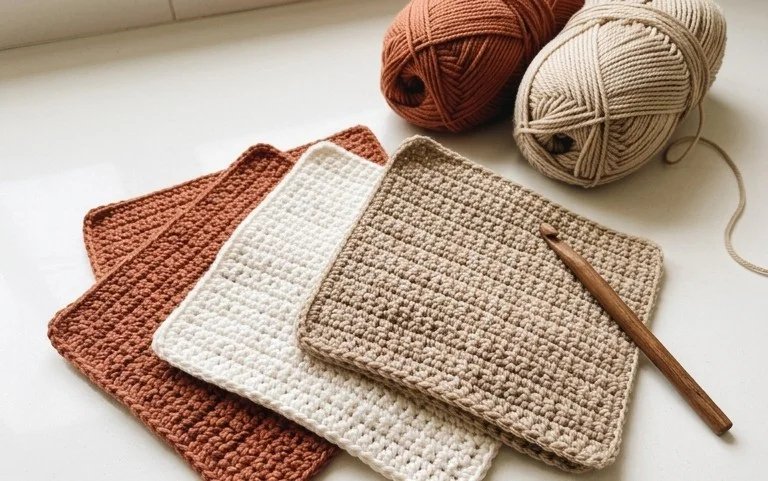
This classic crochet dishcloth is designed with a dense, textured stitch pattern that provides the scrubbing power needed for heavy-duty kitchen cleanup. The pattern utilizes the moss stitch, which creates a durable fabric that stands up to frequent washing and vigorous use. Because it works up in a simple repeat, it is a relaxing project that allows you to build muscle memory quickly. It is also an efficient way to use up cotton yarn leftovers from larger projects, as each cloth requires less than one full skein.
I finally found a pattern that doesn’t stretch out of shape after one week of scrubbing pans. The texture is perfect and it works up so fast that I made a set of four in a single weekend.
— Sarah, home crafter
Pattern Overview & Skill Level
- Skill Level: Beginner
- Approximate Time: 1 to 2 hours
- Construction: Worked in flat rows starting from a foundation chain
- Finished Dimensions: 8 inches by 8 inches
Materials & Supplies Needed
- Yarn: Worsted weight (#4), 100% cotton, approximately 60 yards. Using 100% cotton is mandatory for dishcloths because synthetic fibers like acrylic do not absorb water well and may melt under high heat.
- Hook Size: 5.0 mm (US H-8)
- Notions: Tapestry needle for weaving in ends, scissors, and an optional stitch marker to keep track of the first stitch of each row.
- Yarn Substitutions: You can use a cotton-linen blend for added durability, though this may make the fabric slightly stiffer. Avoid wool or alpaca, as these fibers will felt when exposed to hot water and frequent scrubbing.
Stitch Guide & Abbreviations (US Terms)
- ch = chain
- sc = single crochet
- st = stitch
- sl st = slip stitch
- sk = skip
- Moss Stitch = A sequence of single crochet and chain stitches where the single crochet is worked into the chain space from the previous row.
Step-by-Step Pattern Instructions
This dishcloth is worked back and forth in rows. The moss stitch requires an even number of stitches to remain symmetrical.
Main Body
- Row 1: Ch 32. Sc in the 4th ch from hook. *Ch 1, sk 1 ch, sc in the next ch. Repeat from * across. Turn. (16 sc, 15 ch-1 spaces)
- Row 2: Ch 2. Sc in the first ch-1 space. *Ch 1, sk the sc, sc in the next ch-1 space. Repeat from * across, ending with a sc in the turning ch-space. Turn. (16 sc, 15 ch-1 spaces)
- Rows 3 to 30: Repeat Row 2 until the piece measures approximately 8 inches from the starting edge.
Finishing
- Cut the yarn, leaving a 6-inch tail.
- Pull the tail through the final loop on your hook to secure the stitch.
- Use a tapestry needle to weave the tail through the stitches of the final row.
- Repeat the weaving process for the starting tail at the base of the cloth. Trim any excess yarn flush with the fabric.
Care & Washing Instructions
- Machine wash in warm water on a gentle cycle to remove oils and kitchen grime.
- Tumble dry on low heat or lay flat on a drying rack to maintain the square shape.
- Reshape the dishcloth with your hands while it is still slightly damp to ensure it stays flat for storage.
Pro Tips & Common Mistakes to Avoid
Maintain consistent tension throughout the project by ensuring your chains are not pulled too tightly. If your tension is too tight, the dishcloth will become stiff and lose its ability to drape over dishes. Use a stitch marker in the first sc of every row to ensure you do not accidentally skip the final chain space, which is a common mistake that leads to a slanted edge. Weave your ends in by working them in alternating directions through the center of the fabric rather than just along the edge; this prevents them from coming undone during repeated scrubbing. If you choose to increase the size of the dishcloth, add your chains in multiples of two to keep the moss stitch pattern consistent, and note that you will need approximately 10 extra yards of yarn for every two inches added to the width.
Frequently Asked Questions
Can I use a larger hook for this pattern?
Using a larger hook will result in a looser, more open fabric. While this makes the project faster to complete, it will reduce the scrubbing efficiency of the cloth. Stick to the 5.0 mm hook for a dense, professional result.
Is this pattern suitable for complete beginners?
Yes, this is an ideal project for beginners because it only uses single crochet and chain stitches. The repeat is simple, allowing you to focus on developing even tension without worrying about complex stitch counts.
Can I sell the dishcloths I make from this pattern?
You are welcome to sell finished items made from this design. I request that you credit the pattern design to my name in your product listings to support my work.
Why is my dishcloth curling at the edges?
Curling usually occurs when the starting chain is worked too tightly. If you notice curling, try using a hook one size larger specifically for the foundation chain to ensure the base has enough slack to sit flat.
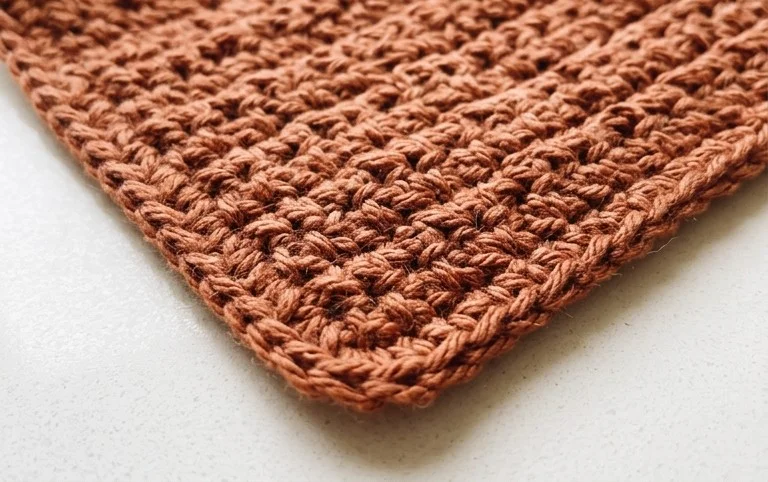
Your finished cloth will quickly become a favorite in the kitchen due to its scrubby surface and absorbent weight. You might experiment with variegated yarn for a colorful look or add a simple hanging loop to the corner for faster drying. Seeing your finished work brings a sense of accomplishment, so feel free to share a photo of your project online to inspire others. Check out the rest of the blog for more patterns that help you build your skills one stitch at a time.